Dr. Radosław Zajdel

I work at the intersection of satellite geodesy and Earth system science. In my research, I primarily exploit the benefits of multi-GNSS constellations and contribute to the development of evolving navigation systems such as Galileo, BeiDou, and QZSS. Additionally, my expertise includes understanding the role of global geodetic observation techniques in Earth’s reference systems and linking geodesy to Earth sciences.

I am currently extending this expertise toward navigation infrastructures for future lunar and Martian missions, examining how geodetic principles and multi-technique positioning can support robust navigation services beyond Earth.

I thrive in collaborative, international research environments, continually develop both technical and soft skills, and contribute actively to group discussions with dedication, curiosity, and an open mind.
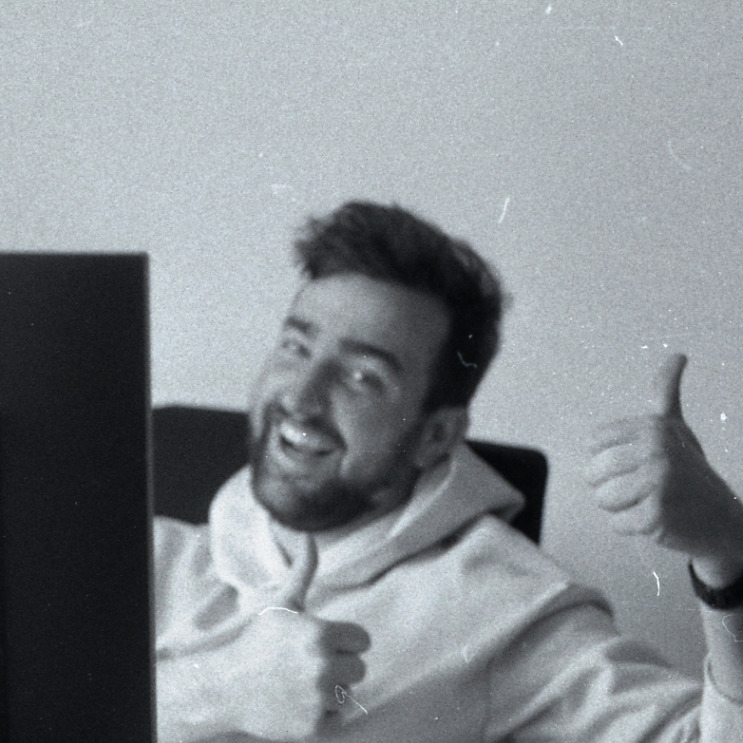
Photo of Radoslaw Zajdel

Keywords

  • satellite geodesy
  • gnss
  • slr
  • reference frames
  • earth rotation
  • geocenter
  • orbits
  • orbit validation

Currently Involved In

A snapshot of the working groups, grants, and services that define my present research agenda.

Employment

Research Fellow — Geodetic Observatory Pecny (GOP)

Apr 2024 – present
  • Role: GNSS specialist deriving essential geodetic variables from multi-GNSS solutions that feed international reference-frame services.
  • Place of realization: Geodetic Observatory Pecny (Czechia).

Assistant Professor — UPWr

Aug 2022 – present
  • Role: Assistant professor designing curricula, supervising satellite-geodesy research, and leading programming, GNSS, and reference-frame courses.

Projects

EU Horizon Europe / MSCA COFUND — BIG4

2024 – 2026

ESA NAVISP EL1-114 — Exploring the Needs for Accurate Reference Frames (E-NAFF)

2025 – 2026

ESA — Fundamental Techniques, Models and Algorithms for a Mars Radio Navigation System (MAPS)

2025 – 2026

ESA — Advanced Concept for Lunar ODTS (ASTRON)

2025 – 2026

Working Groups

IGS Combination Task Force (CTF)

2023 – present
  • Role: Member in an inter-institutional effort to lay the foundations for multi‑GNSS orbit/clock combination for global users; partners include DLR, Geoscience Australia, GFZ, JAXA, SHAO, TUM, Université Paris‑Cité, Wuhan University.
  • Place of realization: International GNSS Service (global collaboration).

IGS Task Force for Combination Statistics Format

2025 – present
  • Role: Member of an inter‑institutional team designing an exchange format for combination quality metrics and diagnostics; collaborators include University of Bern, MIT, NRCan, TU Delft, CNES, TUM, Geoscience Australia.
  • Place of realization: International GNSS Service (global collaboration).

Organizations & Services

UPWr ILRS Analysis Center

2017 – present
  • Role: Coordinator of the ILRS-affiliated analysis center, maintaining the online SLR orbit-validation service for IGS/ILRS analysis centers and publishing quality-control reports.
  • Place of realization: Wroclaw University of Environmental and Life Sciences (Poland).

Scientific Degrees

Doctor of Technical Sciences (Ph.D.)

  • University: Wroclaw University of Environmental and Life Sciences, Faculty of Environmental Engineering and Geodesy, Institute of Geodesy and Geoinformatics.
  • Thesis: “Determination of Global Geodetic Parameters Using the GPS, GLONASS, and Galileo Satellite Systems” (civil engineering and transport, satellite geodesy).
  • Defense: September 9, 2021 — grade 5.0 with distinction.
  • Supervisors: Prof. Krzysztof Sośnica and Dr. Kamil Kaźmierski.
  • Reviewers: Prof. Dr.-Ing. Dr. h. c. Harald Schuh (GFZ Potsdam, Technische Universität Berlin) and Priv. Doz. Dr. rer. nat habil. Oliver Montenbruck (DLR, Oberpfaffenhofen).

Master of Science in Geoinformatics and Satellite Geodesy

  • University: Wroclaw University of Environmental and Life Sciences.
  • Thesis: “Web-application development for visualization and analyses of multi-GNSS orbit validation results using SLR.”
  • Final exam: July 13, 2017 — final grade 5.0 (very good).
  • Supervisor: Prof. Krzysztof Sośnica.

Career Timeline

Key academic and research roles presented chronologically.

Research Fellow — Research Institute of Geodesy, Topography and Cartography (GOP)

Apr 2024 – present · Pecny, Czech Republic

Assistant Professor — UPWr

Aug 2022 – present · Wroclaw, Poland

Research Assistant — UPWr

Oct 2021 – Feb 2022 · Wroclaw, Poland

Ph.D. Student — UPWr

Oct 2017 – Sep 2021 · Wroclaw, Poland

Business Collaboration

ESA Projects & Industry

  • ESA‑ATLAS: Consortium with Argotec S.r.l. and Leonardo S.p.A.; results delivered as recommendations for Phase II implementation contracted by ESA with space‑industry partners.
  • ESA‑MAPS: In addition to research partners, industry partners include Thales Alenia Space, Telespazio, and Qascom.
  • ESA NAVISP E‑NAFF: Analysis of industry user needs for reference frames: quality requirements, interoperability, and adoption pathways.

ESA BIC & White Papers

  • ESA BIC Czech Republic: Startup incubation application; 2nd place in the LIFTOFF Challenge (2024) with project “LOCTIE”; Business Plan developed with Alfredo Mensi (CEO, X‑Ender) and Liliana Unachukwu (Advisor to Founders).
  • White papers: Co‑author of expert guides for ESA missions — GENESIS (Springer Open) and Novamoon (arXiv).

Publications

  1. Zajdel, R., Balidakis, K., Nowak, A., Kur, T., Sośnica, K., & Douša, J. (2025). Three decades of GNSS-derived geocenter motion: Disentangling geophysical signal from systematic errors. Advances in Space Research. https://doi.org/10.1016/j.asr.2025.11.053
  2. Zajdel, R., Mansur, G., Sakić, P., Rebischung, P., Brack, A., Männel, B., & Douša, J. (2025). Advancing multi-GNSS orbit combination in the variance component estimation framework. Journal of Geodesy, 99(11), 90. https://doi.org/10.1007/s00190-025-02005-w
  3. Zajdel, R., Nowak, A., & Sośnica, K. (2024). Satellite laser ranging to BeiDou-3 satellites: Initial performance and contribution to orbit model improvement. GPS Solutions, 28(3), 100. https://doi.org/10.1007/s10291-024-01638-2
  4. Zajdel, R., & Sośnica, K. (2024). Decadal evolution of GPS, GLONASS, and Galileo mean orbital elements. GPS Solutions, 28(4), 14. https://doi.org/10.1007/s10291-024-01708-5
  5. Zajdel, R., Masoumi, S., Sośnica, K., Gałdyn, F., Strugarek, D., & Bury, G. (2023). Combination and SLR validation of IGS Repro3 orbits for ITRF2020. Journal of Geodesy, 97(10), 87. https://doi.org/10.1007/s00190-023-01777-3
  6. Zajdel, R., Kaźmierski, K., & Sośnica, K. (2022). Orbital artifacts in multi-GNSS precise point positioning time series. Journal of Geophysical Research: Solid Earth, 127(2), 19. https://doi.org/10.1029/2021JB022994
  7. Zajdel, R., Steigenberger, P., & Montenbruck, O. (2022). On the potential contribution of BeiDou-3 to the realization of the terrestrial reference frame scale. GPS Solutions, 26(4), 109. https://doi.org/10.1007/s10291-022-01298-0
  8. Zajdel, R., Sośnica, K., & Bury, G. (2021). Geocenter coordinates derived from multi-GNSS: A look into the role of solar radiation pressure modeling. GPS Solutions, 25(1), 15. https://doi.org/10.1007/s10291-020-01037-3
  9. Zajdel, R., Sośnica, K., Bury, G., Dach, R., Prange, L., & Kaźmierski, K. (2021). Sub-daily polar motion from GPS, GLONASS, and Galileo. Journal of Geodesy, 95(1), 3. https://doi.org/10.1007/s00190-020-01453-w
  10. Zajdel, R., Sośnica, K., Bury, G., Dach, R., & Prange, L. (2020). System-specific systematic errors in Earth rotation parameters derived from GPS, GLONASS, and Galileo. GPS Solutions, 24(3), 74. https://doi.org/10.1007/s10291-020-00989-w
  11. Zajdel, R., Sośnica, K., Dach, R., Bury, G., Prange, L., & Jäggi, A. (2019). Network effects and handling of the geocenter motion in multi-GNSS processing. Journal of Geophysical Research: Solid Earth, 124(6), 5970–5989. https://doi.org/10.1029/2019JB017443
  12. Zajdel, R., Sośnica, K., Drożdżewski, M., Bury, G., & Strugarek, D. (2019). Impact of network constraining on the terrestrial reference frame realization based on SLR observations to LAGEOS. Journal of Geodesy, 93(11), 2293–2313. https://doi.org/10.1007/s00190-019-01307-0
  13. Zajdel, R., Sośnica, K., & Bury, G. (2017). A new online service for the validation of multi-GNSS orbits using SLR. Remote Sensing, 9(10), 1049. https://doi.org/10.3390/rs9101049

All remaining co-authored publications are listed on the Base of Knowledge portal: https://bazawiedzy.upwr.edu.pl/info/author/UPWrda0b0cf17b3944ba9ab531afe696fdfa/.

Reviewer & Bibliometrics

Journal Reviewer

I regularly review manuscripts for leading journals indexed in the Journal Citation Reports.

  • Journal of Geodesy
  • GPS Solutions
  • Advances in Space Research
  • Pure and Applied Geophysics
  • Acta Astronautica
  • Artificial Satellites
  • International Association of Geodesy Symposia

Bibliometric Snapshot (update 25.02.2026)

  • h-index (Scopus): 20
  • h-index (Web of Science): 20
  • Cumulative Impact Factor: 185.269
  • Cumulative SNIP: 88.756
  • Polish Ministry of Science (MeiN) points: 5 866

Identifiers

Identifiers

Research Grants

I coordinate and contribute to national and European grants that advance space-geodetic technologies.

Project Coordinator

  1. 2024–2026: MERIT MSCA-COFUND grant (Research Institute of Geodesy, Topography and Cartography / GOP). Project BIG4 - Benefits of GNSS Integration for Geodesy, Geophysics, and Geodynamics.
  2. 2023–2024: UPWr internal grant. Development of innovative solution weighting methods for improving the quality of multi-GNSS satellite orbit combinations.
  3. 2020–2021: National Science Center ETIUDA fellowship. Determination of global geodetic parameters using the Galileo satellite system. (UMO-2020/36/T/ST10/00097)

Project Contributor

  1. 2025–2026: ESA NAVISP EL1-114 — Exploring the Needs for Accurate reFerence Frames (E-NAFF). Role: GNSS/SLR expert; includes business-facing user-needs analysis for reference frames. (ESA AO/1-12644/24/NL/MP/dg)
  2. 2025–2026: ESA — Fundamental techniques, models and algorithms for a Mars radio navigation system (MAPS). Role: Task lead (WP1000); Consortium: Thales Alenia Space; Telespazio; Qascom. (ESA AO/1-12814/25/NL/AT)
  3. 2025–2026: ESA — Advanced Concept For Lunar ODTS (Orbit Determination and Time Synchronization) (ASTRON). Role: Investigator; expands GNSS usage within ODTS concepts. (ESA AO/1-12814/25/NL/AT)
  4. 2021–2023: ESA — Fundamental techniques, models and algorithms for a Lunar Radio Navigation system. Heads: Prof. Luciano Iess and Prof. Krzysztof Sośnica. (ESA AO/1-10712/21/NL/CRS)
  5. 2020–2023: National Science Center OPUS — Integrated terrestrial spatial reference systems based on laser distance measurements to geodetic, remote sensing and GNSS satellites. Head: Prof. Krzysztof Sośnica. (UMO-2019/35/B/ST10/00515)
  6. 2020–2023: EPOS-PL+ (EU Smart Growth Programme) — European Plate Observation System. Head: Dr. Jan Kapłon. (POIR.04.02.00-00-C005/19)
  7. 2019–2022: National Science Center OPUS — Determination of global geodetic parameters using the Galileo satellite system. Head: Prof. Krzysztof Sośnica. (UMO-2018/29/B/ST10/00382)
  8. 2017–2022: EPOS (EU Smart Growth Programme) — European Plate Observation System. Heads: Dr. Dorota Olszewska and Prof. Witold Rohm. (POIR.04.02.00-14-A003/16-00)
  9. 2020–2021: ESA — General Relativistic Effects in the orbits of Galileo Satellites. Head: Prof. Krzysztof Sośnica. (ESA Contract 4000130481/20/ES/CM)
  10. 2017: National Science Center OPUS — Innovative methods of tropospheric delay modeling for laser distance measurements to artificial satellites of the Earth. Head: Prof. Krzysztof Sośnica. (UMO-2015/17/B/ST10/03108)

International Conferences

Comprehensive record of presentations and posters delivered at leading events.

Presentations

  1. Zajdel, R., Mansur, G., Brack, A., Sakic, P., Männel, B., Douša, J. (2024). Optimizing Multi-GNSS Orbit and Clock Combination using Variance Component Estimation. 9th International Colloquium on Scientific and Fundamental Aspects of GNSS, Wrocław, Poland.
  2. Zajdel, R., Mansur, G., Brack, A., et al. (2024). Multi-GNSS Orbit and Clock Combination based on Variance Component Estimation. IGS Symposium & Workshop, Bern, Switzerland, 1-5 July 2024. http://dx.doi.org/10.13140/RG.2.2.12358.89929
  3. Zajdel, R., Mansur, G., Brack, A., et al. (2024). Optimizing Multi-GNSS Orbit Combination. EGU General Assembly 2024, Vienna, Austria, 14–19 April 2024, EGU24-876. https://doi.org/10.5194/egusphere-egu24-876
  4. Zajdel, R., Bury, G., Sośnica, K., Strugarek, D., Gałdyn, F., Nowak, A. Frontiers in GNSS orbit modeling – conclusions and open issues emerging from the analysis of the IGS Repro3 orbits. XXVIII IUGG General Assembly, Berlin, Germany.
  5. Zajdel, R., Sośnica, K., Masoumi, S., Bury, G., Strugarek, D. (2023). SLR validation of the IGS Repro3 orbits for ITRF2020. EGU General Assembly 2023, Vienna, Austria.
  6. Zajdel, R., Sośnica, K., Bury, G. (2022). Determination of ERPs from GPS, GLONASS, and Galileo. Second Earth Orientation Parameters Prediction Comparison Campaign Workshop, Warsaw, Poland.
  7. Zajdel, R., Sośnica, K., Bury, G., Strugarek, D. (2022). Assessment of IGS Repro3 orbits using SLR observations. IGS 2022 Virtual Workshop "Science from Earth to Space".
  8. Zajdel, R., Kaźmierski, K., Sośnica, K. (2022). System-specific signals in multi-GNSS Precise Point Positioning. 8th International Colloquium on Scientific and Fundamental Aspects of GNSS, Sofia, Bulgaria.
  9. Zajdel, R., Kaźmierski, K., Sośnica, K. (2022). Inconsistency in Precise Point Positioning products from GPS, GLONASS and Galileo. EGU General Assembly 2022, Vienna, Austria.
  10. Zajdel, R., Steigenberger, P., Montenbruck, O. (2022). Quality assessment of the BeiDou-3 phase center offset calibrations in terms of the realization of the terrestrial reference frame scale. IAG International Symposium on Reference Frames for Applications in Geosciences, Thessaloniki, Greece.
  11. Zajdel, R., Sośnica, K., Bury, G., Strugarek, D., Drożdżewski, M. (2021). Differences in geocenter coordinate estimates delivered from GPS, GLONASS, and Galileo. IAG Scientific Assembly "Geodesy for a Sustainable Earth" (virtual, Beijing).
  12. Zajdel, R., Sośnica, K., Bury, G., Kaźmierski, K. (2021). Estimating variations in Earth rotation using GPS, GLONASS, and Galileo. EGU General Assembly 2021 vEGU21.
  13. Zajdel, R., Kaźmierski, K., Sośnica, K. (2021). Recognition of periodic signals in coordinate time series from GPS, GLONASS, and Galileo Precise Point Positioning. IAG Scientific Assembly "Geodesy for a Sustainable Earth" (virtual).
  14. Zajdel, R., Sośnica, K., Dach, R., Bury, G., Prange, L. (2019). Galileo-based Earth rotation parameters derived with a daily and sub-daily resolution. 7th International Colloquium on Scientific and Fundamental Aspects of GNSS, Zurich, Switzerland.
  15. Zajdel, R., Sośnica, K., Dach, R., Bury, G., Prange, L. (2019). Galileo-based Earth rotation parameters with sub-daily resolution. 27th IUGG General Assembly, Montreal, Canada.
  16. Zajdel, R., Sośnica, K., Bury, G., Kaźmierski, K., Strugarek, D. (2019). Sub-daily Earth Rotation Parameters from GPS, GLONASS and Galileo. 20th Czech-Polish Workshop on Recent Geodynamics of Central Europe & 2nd Symposium of the Committee on Geodesy PAS, Jakuszyce, Poland.
  17. Zajdel, R., Sośnica, K., Bury, G. (2018). GOVUS - SLR@multi-GNSS service. 21st International Workshop on Laser Ranging, Riga, Latvia.
  18. Zajdel, R., Sośnica, K., Bury, G. (2017). New ILRS Associated Analysis Center for processing SLR observations to multi-GNSS. ILRS Analysis Standing Committee Meeting, Vienna, Austria.
  19. Zajdel, R., Sośnica, K., Bury, G. (2017). GOVUS – a new online tool for the evaluation of SLR observations to GPS, GLONASS, Galileo, BeiDou and QZSS. ILRS Technical Workshop, Riga, Latvia.

Posters

  1. Zajdel, R., Smolak, K., Douša, J., Steigenberger, P., Schönemann, E., Gini, F. (2025). Clustering the GNSS landscape: satellite-specific insights from geodetic time series. IAG 2025 Scientific Assembly "Geodesy for a Changing Environment", Rimini, Italy.
  2. Zajdel, R., Balidakis, K., Nowak, A., Gałdyn, F., Sośnica, K., Dobslaw, H. (2025). Exploring network effects in GNSS-based low-degree gravity field coefficients. IAG 2025 Scientific Assembly, Rimini, Italy.
  3. Zajdel, R., Balidakis, K., Nowak, A., Gałdyn, F., Sośnica, K., Douša, J. (2024). Combined GNSS-based model of geocenter motion based on the IGS Repro3 products. 9th International Colloquium on Scientific and Fundamental Aspects of GNSS, Wrocław, Poland.
  4. Zajdel, R., Nowak, A., Sośnica, K. Satellite Laser Ranging to 24 BeiDou-3 MEO satellites. XXVIII IUGG General Assembly, Berlin, Germany.
  5. Zajdel, R., Sośnica, K., Bury, G. (2022). Decadal analysis of the evolution of Galileo mean orbital elements. 8th International Colloquium on Scientific and Fundamental Aspects of GNSS, Sofia, Bulgaria.
  6. Zajdel, R., Sośnica, K., Masoumi, S., Bury, G., Strugarek, D. (2022). Evolution of the Galileo orbit quality: SLR validation of the IGS Repro3 products. 8th International Colloquium on Scientific and Fundamental Aspects of GNSS.
  7. Zajdel, R., Sośnica, K., Dach, R., Bury, G., Prange, L. (2019). Handling of geocenter motion in the GNSS solutions. 7th International Colloquium on Scientific and Fundamental Aspects of GNSS, Zurich, Switzerland.
  8. Zajdel, R., Sośnica, K., Drożdżewski, M., Bury, G. (2018). Different approaches to the reference frame implementation in SLR-LAGEOS solution. 21st International Workshop on Laser Ranging, Canberra, Australia.
  9. Zajdel, R., Dach, R., Sośnica, K., Prange, L. (2018). Impact of the multi-GNSS station distribution and datum definition on station coordinates. EUREF Symposium 2018, Amsterdam, the Netherlands.
  10. Zajdel, R., Sośnica, K., Bury, G., Kaźmierski, K. (2017). GOVUS.pl: a new online service for Galileo, GLONASS, BeiDou and QZSS orbit validation using Satellite Laser Ranging data. 6th International Colloquium on Scientific and Fundamental Aspects of GNSS/Galileo, Valencia, Spain.

Teaching

As an assistant professor I design graduate-level curricula that combine theoretical geodesy with hands-on GNSS and SLR data processing.

Detailed Course Portfolio

  • 2023/24: Elements of Programming — course coordinator, lectures and labs, 75 teaching hours.
  • 2022/23: Analysis and Processing of Satellite Observations — course coordinator, lectures and lab exercises, 30 hours.
  • 2022/23: Satellite Measurement Techniques — lecturer, 10 hours.
  • 2022/23: Elements of Programming — course coordinator, lectures and labs, 75 hours.
  • 2021/22: Physical Geodesy and Geodynamics — lecturer for lab classes, 45 hours.
  • 2021/22: Geodetic Reference Systems — lecturer for lab classes, 90 hours.
  • 2021/22: Elements of Programming — course coordinator, lectures and labs, 75 hours.
  • 2020/21: Programming in GIS — lecturer for Erasmus laboratory classes, 45 hours.
  • 2020/21: Elements of Programming — course coordinator, lectures and lab exercises, 75 hours.
  • 2019/20: Introduction to Software Engineering — course coordinator, lectures and labs, 45 hours.
  • 2019/20: Analysis and Processing of Satellite Observations — lecturer for labs, 30 hours.
  • 2019/20: Dynamics of Earth’s Artificial Satellite Orbits — lecturer for labs, 30 hours.
  • 2018/19: Geodetic Reference Systems — lecturer for labs, 30 hours.
  • 2018/19: Introduction to Software Engineering — lecturer for labs, 45 hours.

Professional Memberships & Service

I engage with international working groups that shape GNSS and SLR research agendas.

  • Scientific Support Council member for the European Space Agency’s GENESIS-1 mission program.
  • 2025–present: Member of the IGS Task Force for Combination Statistics Format led by Prof. Jianghui Geng (Chinese Academy of Sciences).
  • 2023–present: Member of the IGS Combination Task Force (CTF) for multi-GNSS orbit combination.
  • 2019–2023: Member of IAG Joint Study Group T.24 on integration and co-location of space-geodetic observations and parameters.
  • 2019–2023: Member of IAG Joint Working Group 1.2.3 toward reconciling geocenter motion estimates (joint with IERS).
  • 2017–present: Coordinator of the affiliated ILRS analysis center at UPWr focusing on SLR-based orbit validation.
  • 2016–2019: Member of IAG Joint Analytical Group JSG 0.14 on fusion of multi-technique geodetic data.

Awards & Distinctions

Recognition for scientific impact, teaching excellence, and conference contributions.

Other

  • 2023 — IAG Young Author’s Award for best publication in Journal of Geodesy.
  • 2024 — Second prize for the project “LOCTIE” in the ESA BIC Czech Republic LIFTOFF CHALLENGE, a space entrepreneurship competition for students and young professionals linking innovations to the space sector.

Scholarships & Fellowships

  • 2021 — START Fellowship of the Foundation for Polish Science (extended award for top five laureates).
  • 2021 — Scholarship of the Minister of Science and Higher Education for outstanding young scientists.
  • 2020 — Jan Mozrzymas Scholarship for interdisciplinary research achievements (under the patronage of the Mayor of Wrocław).

Conference Awards

  • 2024 — Best presentation and poster (ESA) at the 9th International Colloquium on Scientific and Fundamental Aspects of GNSS, Wrocław.
  • 2022 — Best presentation and poster (ESA) at the 8th International Colloquium on Scientific and Fundamental Aspects of GNSS, Sofia.
  • 2017 — Best poster (ESA) at the 6th International Colloquium on Scientific and Fundamental Aspects of GNSS, Valencia.

Organizational Efforts

Session Convener — EGU General Assembly

Session: G2.2 Terrestrial Reference Frames: systematic errors in modern space geodetic observation techniques, determination and applications · Editions: 2024 & 2025 · Venue: European Geosciences Union General Assembly, Vienna

  • Led the multidisciplinary program design connecting GNSS, SLR, VLBI, and DORIS advances with reference-frame applications for geodesy and Earth system monitoring.
  • Coordinated international conveners, managed abstract reviews, and balanced oral/poster allocations to highlight early-career and cross-technique contributions.
  • Moderated the live session discussions to surface emerging methodologies for diagnosing systematic errors and improving Terrestrial Reference Frame accuracy.

Session Convener — ESA Scientific and Fundamental Aspects of GNSS

Session: Reference Frames and Precise Orbit Determination · Edition: 9th International Colloquium, 25–27 Sep 2024 · Venue: ESA/ESTEC, Noordwijk

  • Guided the scientific focus on linking precise orbit determination advances with the realization of Terrestrial Reference Frames for GNSS, SLR, and lunar navigation missions.
  • Organized the session timeline, reviewed submissions, and orchestrated speaker briefings to ensure coherence across national agencies, academia, and industry.
  • Led the session wrap-up to synthesize key challenges in reference-frame stability, calibration strategies, and future ESA-funded research directions.

Plenary Meeting with Dr. Sławosz Uznański-Wiśniewski

Venue: Wroclaw University of Environmental and Life Sciences, Poland · Date: November 2025

  • Led the organization and coordination of a high-profile plenary event featuring ESA astronaut Dr. Sławosz Uznański-Wiśniewski (Axiom 4 / IGNIS mission) as keynote speaker.
  • Collaborated with university faculties and student groups to host an audience of students, researchers, and space technology enthusiasts.
  • Managed event logistics, program flow, and liaison with the speaker to deliver an engaging lecture, Q&A, and discussion on astronaut training and mission experience.
  • Promoted interdisciplinary interaction and knowledge exchange between academic participants and the international space community.

Coordination of the Satellite and Space Data Engineering Program

Venue: Wroclaw University of Environmental and Life Sciences, Poland · Timeline: 2025 – present

  • Oversaw the development and implementation of the undergraduate program Satellite and Space Data Engineering (Inżynieria Danych Satelitarnych i Kosmicznych), an interdisciplinary curriculum combining data science, satellite technologies, geoinformatics, and space applications.
  • Collaborated with faculty, industry partners, and institutional leadership to shape academic content, recruit expert instructors, and align coursework with emerging needs of the space sector.
  • Facilitated curriculum design that integrates satellite data analysis, machine learning, navigation systems, and environmental monitoring, positioning UPWr at the forefront of space-oriented education in Poland.
  • Contributed to promotional and strategic activities supporting the successful launch and enrollment of the program.

Science Popularization

Beyond Navigation: How GNSS Reveals Earth’s Hidden Secrets

Publication: EGU Geodesy Division Blog · Date: 28 Nov 2025

Co-authored with Dr. Jan Douša to explain how GNSS technology extends beyond daily positioning into Earth-system science, enabling precise monitoring of tectonic motion, ice loss, sea-level change, and other dynamic processes. Read the feature.

“Za 300 metrów dotrzesz do celu” — Public Lecture on Satellite Navigation

Venue: Studio BWA Wrocław · Date: 9 Oct 2024

Delivered a free lecture in the Postęp series explaining how GPS, GLONASS, Galileo, and BeiDou transformed transport, logistics, agriculture, Earth sciences, and emergency response, while outlining the history, challenges, and future innovations of navigation systems. Event details.

“Díky kombinaci satelitních dat získáme přesnější obraz Země” — Interview

Outlet: VědaVýzkum.cz · Date: 16 Jun 2025

Interview by Tereza Mašínová highlighting how combining GPS, Galileo, and BeiDou data refines Earth-shape descriptions, surface motion, gravity field, and mass distribution for both geoscience research and environmental monitoring. Read the interview.

Space Workshop Lectures for High-School Students

Venue: Vyšší odborná škola, Střední průmyslová škola a Jazyková škola s právem státní jazykové zkoušky, Kutná Hora · Date: 23–24 Oct 2024

Delivered interactive sessions on satellite navigation, space technologies, and Earth observation, pairing demonstrations with Q&A to inspire future engineers and scientists. Watch the recap.

Polskie Radio Jedynka — Contemporary Geodesy & GNSS

Outlet: Polskie Radio Jedynka · Date: 2024

Spoke as a guest expert about how modern GNSS constellations such as GPS and Galileo underpin precise positioning, Earth-monitoring applications, and innovative geodetic research tools that reveal our planet’s dynamic processes. Listen to the interview.

“Wkraczając w erę multi-GNSS” — Geodeta Feature

Publication: Geodeta. Magazyn Geoinformacyjny · Date: June 2018

Co-authored with Krzysztof Sośnica, Grzegorz Bury, Tomasz Hadaś, and Kamil Kaźmierski to show how the expanding multi-GNSS landscape (GPS, Galileo, GLONASS, BeiDou, QZSS, NavIC) boosts positioning accuracy, robustness, and Earth-observation applications while introducing new integration challenges. Read the article.

Workshops & Summer Schools

I continuously update my toolkit through international training events focused on gravimetry, GNSS, and geodetic instrumentation.

  • 2026: METEOR Academy (Horizon Europe) — project transforming doctoral education via transversal skills, interdisciplinary collaboration, and policy-oriented research transfer. meteorhorizon.eu
  • 2026: Agile Project Management Foundation v3 — certificate (Mar 2026).
  • 2025: MERIT Workshops (meritcb.eu): Citizen Science (Sep, lead: Jorge Sanabria; co-lead: Muki Haklay); Beyond the Lab (May, lead: Michal Hrabí); AI-Powered Research (Feb, lead: Daniel Mertens); Funding Opportunities & Grant Writing (Jan, leads: Jana Čejková, Lenka Švejcarová; Jana de Merlier, Ivan Tarant).
  • 2024: MERIT Workshop — Open Access and Data Management Planning (Oct), leads: Eva Hnátková, Martin Schätz.
  • 2024–2026: Individual mentoring with Tomáš Slanina (IOCB Prague, Czech Academy of Sciences) — team leadership and transition from researcher to group leader.
  • 2020: NEROGRAV International Autumn School (DFG / Horizon 2020 initiative).
  • 2019: Scintrex gPhone-X gravimeter training program.
  • 2017: EGSIEM Autumn School of Satellite Gravimetry Applications, Potsdam, Germany.

International Internships

Postdoctoral Placements

  • Apr 2024 – Sep 2026: Research Institute of Geodesy, Topography and Cartography — Geodetic Observatory Pecný (Czechia). Coordinating MSCA‑COFUND MERIT (BIG4); international collaboration with GFZ and UPWr.
  • Feb–Apr 2025: Helmholtz Centre Potsdam GFZ, Germany — Host: Dr. Henryk Dobslaw. Topic: Low-degree gravity recovery based on GNSS displacements. Resulted in one Advances in Space Research article and an IAG 2025 poster.
  • Oct–Dec 2023: GFZ German Research Center for Geosciences, Germany — Hosts: Dr. Benjamin Mannel and Dr. Andreas Brack. Topic: Innovative approaches for multi-GNSS orbit combination. Outcomes: one Journal of Geodesy article and three conference presentations (EGU 2024, IGS 2024, ESA GNSS Colloquium 2024).
  • Nov 2021 – Feb 2022: DLR Oberpfaffenhofen, Germany — Host: Prof. Oliver Montenbruck. Topic: Precise determination of BDS-3 orbits, SRP modeling, and antenna phase center validation. Outcomes: one GPS Solutions article and a REFAG 2022 presentation.

Doctoral Internship

  • Feb–Mar 2018: University of Bern, Astronomical Institute, Switzerland — Hosts: Prof. Adrian Jäggi and Prof. Rolf Roof. Topic: Impact of global network distribution on GNSS product quality. Outcomes: four journal papers and six international conference presentations.

Personal

Outside the lab I am a husband and father of two children, a dedicated home barista, and a volleyball and squash enthusiast. I love butter, black coffee, and making people laugh, and I advocate for flexibility, transparency, and empathy in every team I join.